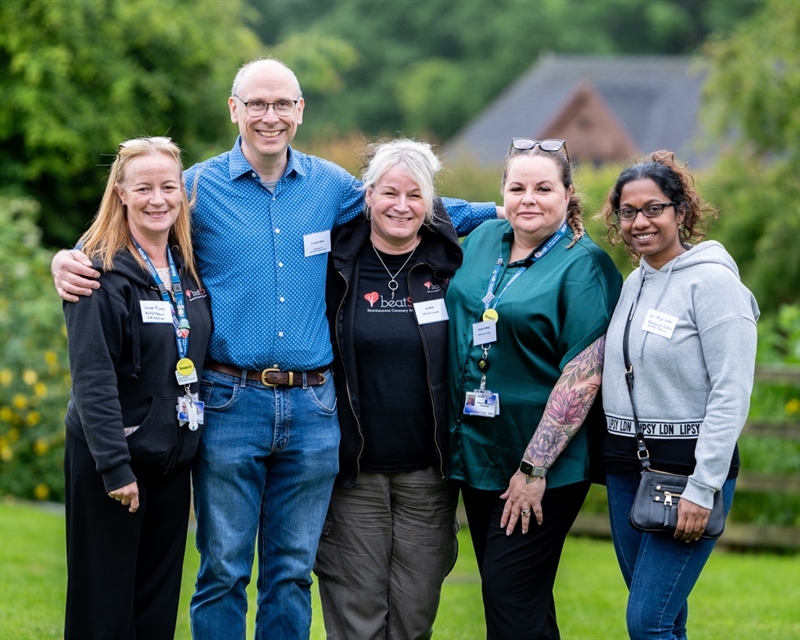
At our 2023 Conference Dr Adlam (pictured with some of his team), who is leading the UK research discussed how collaboration remains a key driver in SCAD research, with increasing numbers of researchers and clinicians globally working together to find answers. Compared to 10 or even five years ago, the amount of research into SCAD has increased massively and Beat SCAD, with the support and fundraising of our community, is proud to be a principal funder of some of the UK research projects (see summary table below). At a previous conference, Dr Adlam extended thanks to the Beat SCAD community and stated: ‘Without Beat SCAD, things would have come to an end. Beat SCAD has been utterly instrumental in allowing us to continue.’
Dr Anju Velvet, who started her Clinical Research Fellowship in February 2024, and whose work is part-funded by Beat SCAD, is focusing on female sex hormones and the menstrual cycle in relation to SCAD and doing a randomised clinical trial for HRT and SCAD. See more here.
She is looking at women of child-bearing age (both SCAD patients and non-SCAD patients as healthy volunteers for comparison), at two different points in the menstrual cycle and performing MRI scans, testing exercise and sex hormone levels.
She is also planning to do a clinical trial to investigate the efficacy of managing post-SCAD chest pain with HRT and the safety of HRT in peri- and post-menopausal women.
Recovery from SCAD is an important topic for patients and cardiac rehab exercise is not tailored to SCAD patients and there is no clear guidance on what physical activity patients should do. Professor Lis Neubeck, Head of the Centre for Cardiovascular Health at Edinburgh Napier University, and her team are focusing on the need to develop a SCAD-specific cardiac rehab programme.
The team worked with 26 patients to co-design a tailored recovery programme for SCAD patients, which involved an eight-week exercise and counselling intervention. She said the high completion rate of the programme indicates that the intervention is highly acceptable to SCAD patients.
Following this pilot study Dr Noemi Vadaszy, Research Exercise Physiologist, in collaboration with Dr Coral Hanson from Edinburgh Napier University and the University of West of Scotland, is researching physical activity and SCAD (funded by Heart Research UK). She says a SCAD-specific recovery programme should include tailored exercise and advice, wearable technology and psychosocial support.
She is doing a randomised control trial (RCT) to investigate the feasibility of a 12-week remote exercise programme and to understand the relationship between physical activity and SCAD and its symptoms, including chest pain.
And for her PhD, Marissa Plaza at Edge Hill University investigated what healthcare professionals know about SCAD and explored the lived experiences of patients. Beat SCAD was on the advisory group for the study and were involved, along with some patients, in framing some of the questions Marissa asked.
Dr Charles Badu-Boateng, Clinical Research Fellow, is investigating how the diagnosis of SCAD could be improved using imaging techniques and artificial intelligence (AI). Angioplasty can be risky for SCAD patients as their arteries tend to be fragile, so a non-invasive way of diagnosing SCAD would reduce that risk. He is investigating whether looking at the tortuosity (shape) of the arteries and the levels of inflammation in the artery could help assess and diagnose SCAD, and how AI can help. His aim is to develop a standardised CT protocol that can improve diagnosis and assessment of SCAD worldwide.
Much of this research was covered in more depth in our 2025 Conference and you can watch the video here.
How money raised for Beat SCAD is being used to fund research:
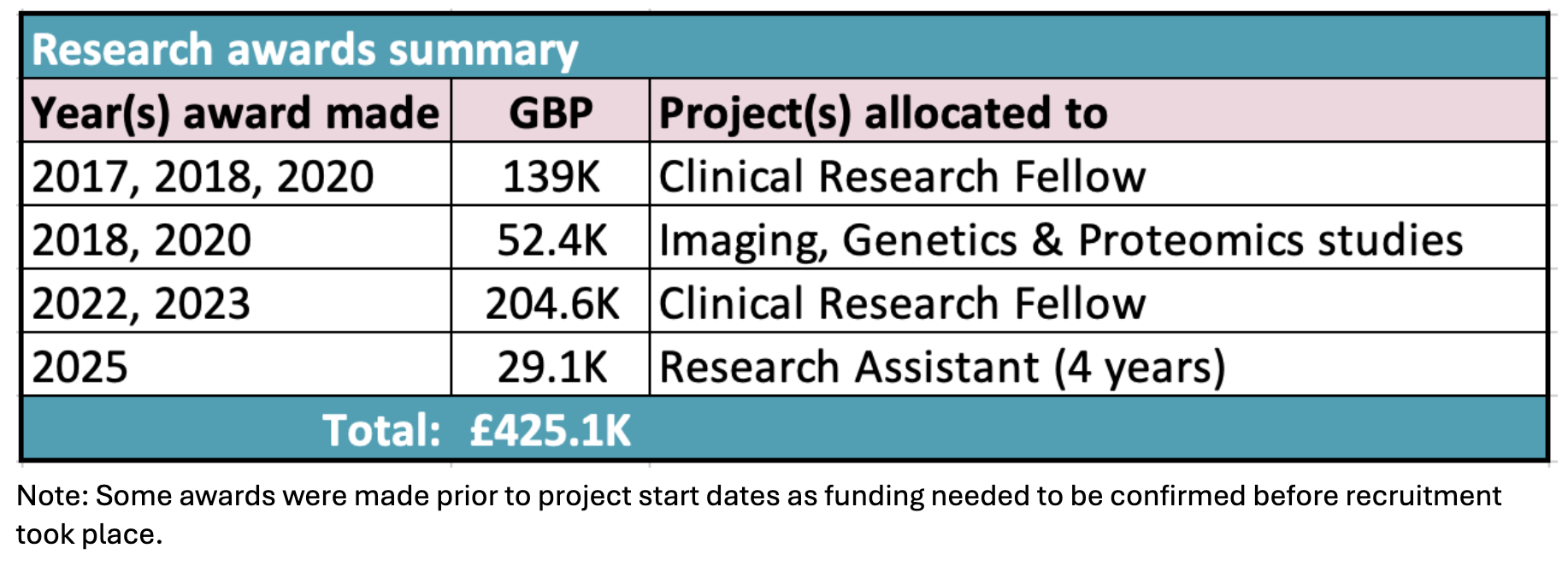
Note: Each year, after we have submitted our annual accounts to the Charity Commission, we produce a report that includes updates on fundraising, research and more. This round-up covers our last financial year, 1 Oct 2024 to 30 Sept 2025.
Click here for our fundraising update and download our impact report here