Congratulations to Marissa Plaza Godoy, who has been awarded her PhD for research into the lived experiences of SCAD patients and the knowledge, understanding and perceptions of healthcare professionals.
She says ‘SCAD can bring changes and uncertainties that affect different aspects of life. This research explored people’s experiences of recovery, changes in physical and psychological wellbeing over time, and their experiences of cardiovascular rehabilitation. It also explored healthcare professionals' perspectives on supporting people affected by SCAD.’
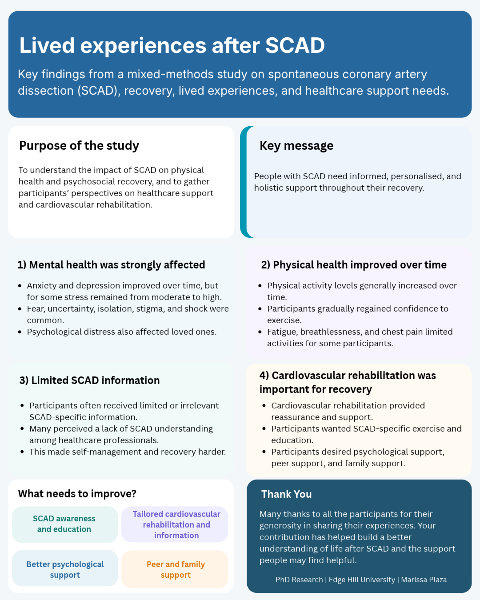
Her key findings were:
1. Mental health was strongly affected
Participants generally experienced improvements in anxiety and depression symptoms over time, but stress remained from moderate to high for some participants. Participants experienced fear, anxiety, low mood, stress, uncertainty, shock, feelings of unfairness, isolation, stigma and the impact of SCAD on their friends and family members.
2. Physical health improved over time
Physical activity levels increase over time, but participants discussed making changes in their daily activities and exercise with limited professional guidance. Additionally, some participants experienced symptoms such as fatigue, shortness of breath and chest pain.
3. Limited SCAD information
Participants tend to receive irrelevant or no information about their condition. Additionally, participants reported a lack of understanding of SCAD in some healthcare professionals, which impacted their experiences and recovery.
4. Cardiovascular rehabilitation was important for recovery
Participants that attended cardiovascular rehabilitation emphasised its benefit in providing them with reassurance throughout their recovery. However, participants considered that the service requires several improvements in the components of exercise, education and psychosocial health, including SCAD education for healthcare professionals, tailored cardiovascular rehabilitation, mental health and peer support, family support and improvements in the referral process.
Opportunities
This research identified opportunities to strengthen SCAD education, provide clearer guidance and ensure that people access appropriate information and support.
Thanks to participants
Marissa adds, ‘Thank you for your collaboration. A heartfelt thank you to everyone who took part in this research and shared their experiences. Your contribution has helped build a better understanding of SCAD recovery and how support could be improved in the future.’
Beat SCAD was very pleased to be able to help support Marissa during her studies and help her recruit patients and we'd like to say thanks to them and healthcare professionals for taking time to talk to Marissa and be part of her research. Thanks, too, to Marissa for her hard work and for adding to the body of research about the effects of SCAD on patients, which will help the community and other researchers and clinicians push for improved quality of care .
Click here to watch her explain her findings at our Conference in 2025
And you can read her thesis here.